
tech center
-

[Particle Size] Definition of Particle Size & Particle Size Distributions
Particle size and particle size distribution are usually reported in terms of diameter irrespective of the actual particle shape; commonly this diameter is the equivalent sphere diameter, defined by ISO 9276-1 as the diameter of a sphere having the same physical attributes as the particle.
-
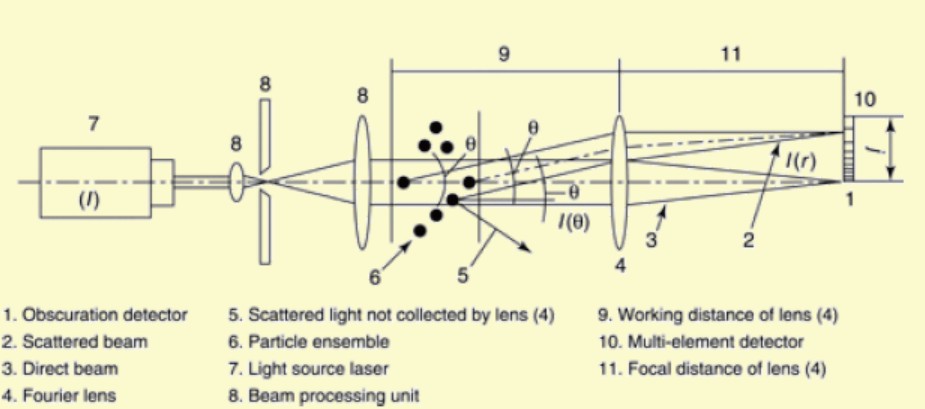
[Particle Size] Particle Size Analysis by Light Diffraction Principle, Method and Calibration
The laser light diffraction technique used for the determination of particle size distribution is based on the analysis of the diffraction pattern produced when particles are exposed to a beam of monochromatic light. Historically, the early laser diffraction instruments only used scattering at small angles. However, the technique has since been broadened to include laser light scattering in a wider angular range and application of the Mie theory, in addition to the Fraunhofer approximation and anomalous diffraction.
-
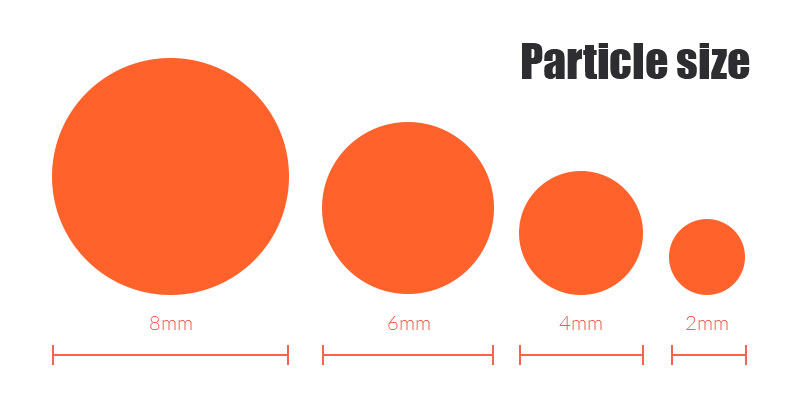
[Particle Size] Principles and Methods of Geological Particle Size Analysis
Particle size is a fundamental property of sedimentary materials that may tell us much about their origins and history. In particular the dynamical conditions of transport and deposition of the constituent particles of rocks is usually inferred from their size. The size distribution is also an essential property for assessing the likely behaviour of granular material under applied fluid or gravitational forces, and gauging the economic utility of bulk materials ranging from foundry sands to china clay.
-

[Particle Size] How to Sampling for Particle Size Distribution Testing
Sampling is an integral and important component to the overall strategy of generating accurate, reproducible, and meaningful particle size distribution results. Th e diff erence between poor and proper results can easily be attributed to poor sampling if not approached with care and understanding. Powders must be mixed, riffl ed, and handled as discussed in this document in order to minimize errors. Remember that errors in the sampling/analysis procedures impact fi nal product specifi cations and therefore can have signifi cant economic impact on particulate based products.
-

[Particle Size] Size Characterization by Laser Light Diffraction Techniques
Size determination techniques using a light beam as a probe are broadly classified into imaging and non-imaging types. Techniques constituting the non-imaging methods of size determination can further be classified into numerous groups based upon the physical principle describing the interaction between the light beam and the particle and the information that can be deduced from that interaction. Laser diffraction instruments fall within this category of non-imaging type of instruments.
-
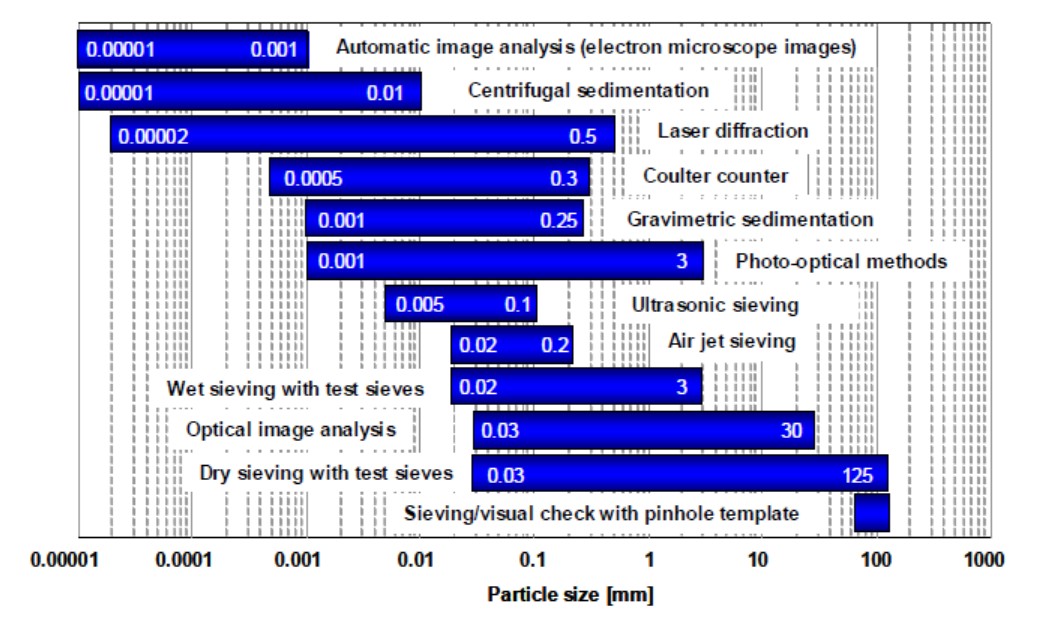
[Particle Size] Three Key Measurement Methods for Particle Size
There is a wide range of measurement methods for particle sizing, each of which has capability over a certain range of particle size. The three principal methods that have been studied are the following: Laser diffraction, Sedimentation of a suspension and Electrozone sensing.
-
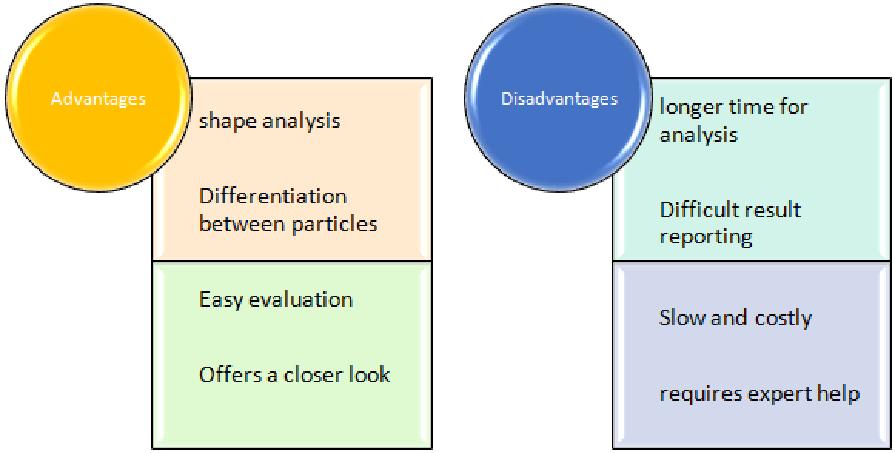
[Particle Size] Particle Size Characterization Techniques & Principles Listings
Particle size characterization can be done using various commercially available instruments. Different instruments are based on different techniques, sometimes even a combination of techniques. Mainly includes Laser Diffraction Technique, Dynamic Light Scattering (DLS), Automated Imaging, Electron Stream Sensing Zone Technique (Coulter Counter Method) and X-Ray Sedimentation.
-

[Particle Size] A Guide to Particle Size and Distribution Analysis for Industrial Processing
Knowledge of particle sizes and the size distribution of a powder system is a prerequisite for most production and processing operations. Particle size and size distribution have a significant effect on the mechanical strength, density, electrical and thermal properties of the finished object. Significant production losses can be incurred due to high rejection rates if size and size distribution of powders being used in a process are not adequately controlled.
-

[Particle Size] A Checklist for Particle Size Measurement
The following table is designed as a quick aide-memoire to remind staff undertaking particle size distribution (PSD) measurements of the main factors that can influence results. Having considered these factors, users are encouraged to define their own protocols for PSD measurement.
-

[Particle Size] Testing Procedures for Particle Size Determination by Laser Light Diffraction Instruments
Procedures to be followed for particle size determination by laser light diffraction instruments are to a great extent specific to the instrument being used and are usually very well defined by the manufacturer. The procedures are designed to work best with the algorithms used in the instrument and are optimized for the instrument set-up. As a result, these procedures vary from one instrument to another. Generally includes Sampling, Dispersion and Homogenization, Optical Alignment and Other Instrument Checks, Background Signal Collection and Determination of Obscuration Levels, Sample Analysis......
-

[Particle Size] Light Diffraction Instruments General Principle
Light diffraction instruments are based on three basic assumptions: (a) The particles scattering the light are spherical in nature, (b) There is little to no interaction between the light scattered from different particles and (c) The scattering pattern at the detectors is the sum of the individual scattering patterns generated by each particle interacting with the incident beam in the sample volume.
-

[Particle Size] Particle Size Data Reporting and Standards
Reporting particle size and particle size distribution information is as critical a component as designing and conducting the experiments that generate this information. The main consideration while reporting size and size distribution data is to ensure that all pertinent information is presented, such that the experiments conducted to generate this information can be reproduced when necessary.
-

[Particle Size] Sources of Errors and Variations for Particle Size Distribution Data
Errors and variations in the observed particle size distribution results can be introduced in various stages of analysis, right from sampling to data interpretation. Most instrument manufacturers list sources of error particular to the instrument and suggest means and techniques to avoid them. The following discussion lists briefly in a general manner the various stages at which errors and other variations can be introduced in the analysis process.
All Rights Reserved by Gold APP Instruments Corp. Ltd.
WeChat WhatsApp


GOLD APP INSTRUMENTS CORP. LTD.
HongKong Add: Flat Rm A17, Legend Tower, No. 7 Shing Yip Street, HK, China
Mainland Add: R1302, Baoli Tianyue, Shaowen Rd., Yanta Dist., Xi'an 710077, China
T: +86-182 0108 5158
E: sales@goldapp.com.cn